
Out with the tiles, in with the greenery
Whether you have a large or small garden, a front yard or a backyard: every square meter of greenery contributes to greater biodiversity. You’re not only making nature and insects happy, but yourself as well: research shows that people who spend time in green spaces feel healthier and get sick less often.
In addition, greening your garden is a simple and effective way to contribute to climate adaptation. By planting more plants, shrubs, and trees, you help reduce flooding and mitigate heat. Gardens with plenty of greenery and sufficient shade are as much as 5°C cooler than a paved garden. In terms of perceived temperature, the difference is even greater.
Green gardens also act like a sponge—they absorb rainwater and release it slowly. Here’s a good example: suppose you replace 10 m² of pavers with greenery. During a heavy rainstorm, that area can absorb dozens of liters of extra water instead of draining it directly into the sewer system. This reduces the risk of flooding on your street and keeps your garden cooler on hot days.
So there are plenty of reasons to go green. But where do you start? And what should you keep in mind? You can read about that below.
Step-by-Step Guide
A beautiful garden that’s good for you and the environment starts with a little daydreaming. Think about how you want your garden to look and map it out step by step.
It starts with answering a few important questions;
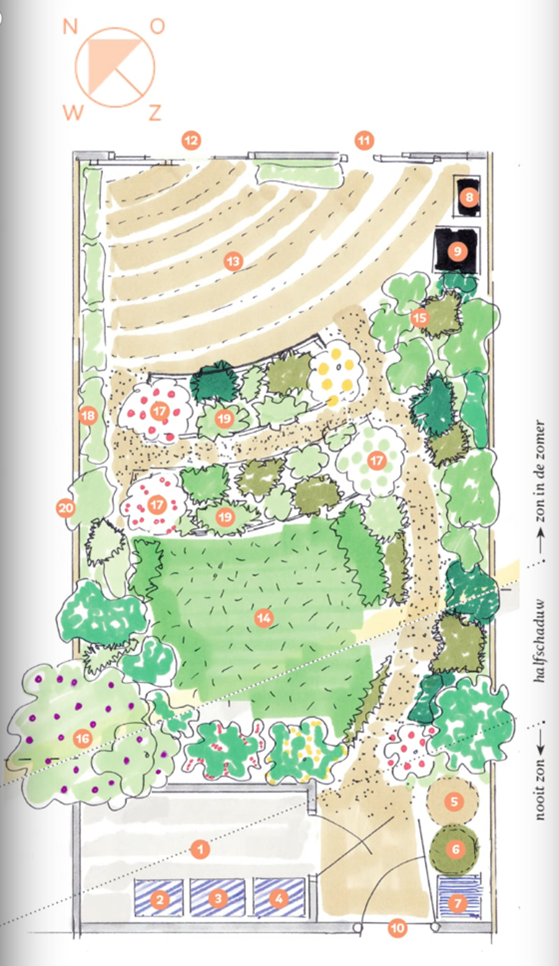
How does the sun hit your garden? Where does it get a lot of sun, and where is it mostly shaded? That determines where you can plant what. Also keep in mind that trees or tall shrubs provide extra shade and help keep the area cool.
Where would you like to sit? And where would you like to leave space for play and greenery? Make a rough sketch of the layout. It helps to draw your sketch to scale.
Do you have a property line separating your property from your neighbors’ or from a public space? Keep in mind that you can also turn that property line into a green space. So instead of a fence, for example, opt for a beautiful hedge.
How do you manage water in the garden? A well-designed garden collects and retains water. For example, set up a rain barrel or disconnect your downspout, dig a small pond, and create variations in elevation. Choose (permeable) semi-paving or wide joints between pavers instead of a sealed tile floor.
What do you like? Decide which colors you’d like to see in your garden. Also, think about what your garden looks like in the winter. Would you like to see evergreen shrubs and trees then? Fill in the rest of your sketch with a layout plan.
Now you have a great starting point, and you can continue working on designing your garden.
Healthy Soil
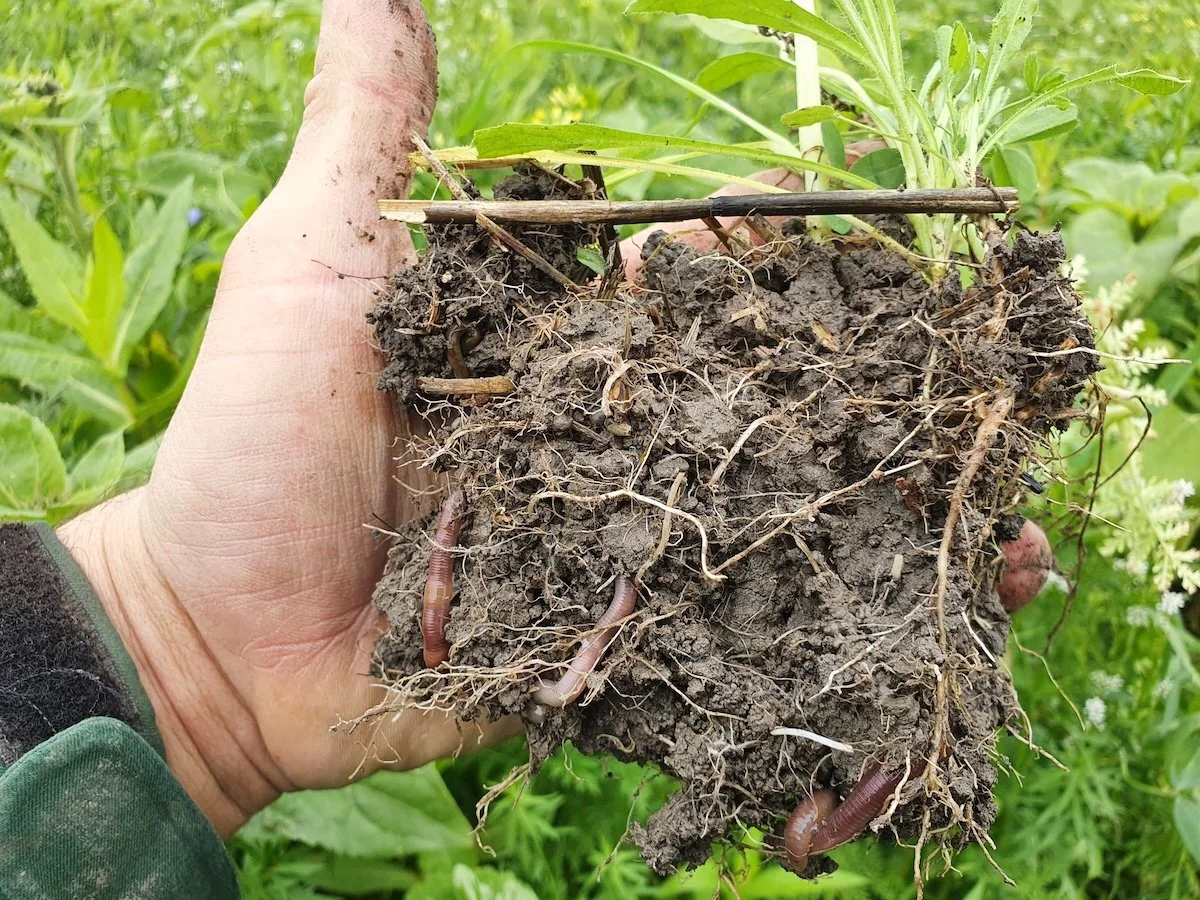
Healthy soil is essential for a thriving garden. It ensures strong plants that require much less water. So start by adding a layer of good garden soil. For shrubs and trees, you’ll need a thicker layer than for other plants. As a general rule, you’ll need about 20–30 centimeters of garden soil—preferably organic, peat-free garden soil.
Most food crops and many plants thrive in nutrient-rich soil. We have plenty of that in Haarlemmermeer, thanks to the clay layer that occurs naturally here. However, many plants that attract pollinators actually prefer poor, nutrient-deficient soil. So for those types of plants, it’s perfectly fine to add some sand and lime.
You can promote the greatest amount of soil life (small animals, fungi, microorganisms) by disturbing the soil as little as possible. “Mulching” helps the soil in this process. You simply leave leaves and other green waste on the ground so the soil can absorb them. Earthworms love it!
Want more tips? Check out the links below:
Planting and Sowing
Spring and fall are the best seasons to get started in the garden. In the spring, plants, trees, and shrubs are just emerging from their dormant period. In the fall, they have often just finished blooming and are about to enter their dormant period. The blooming period itself is less suitable for planting, as it causes them too much stress.
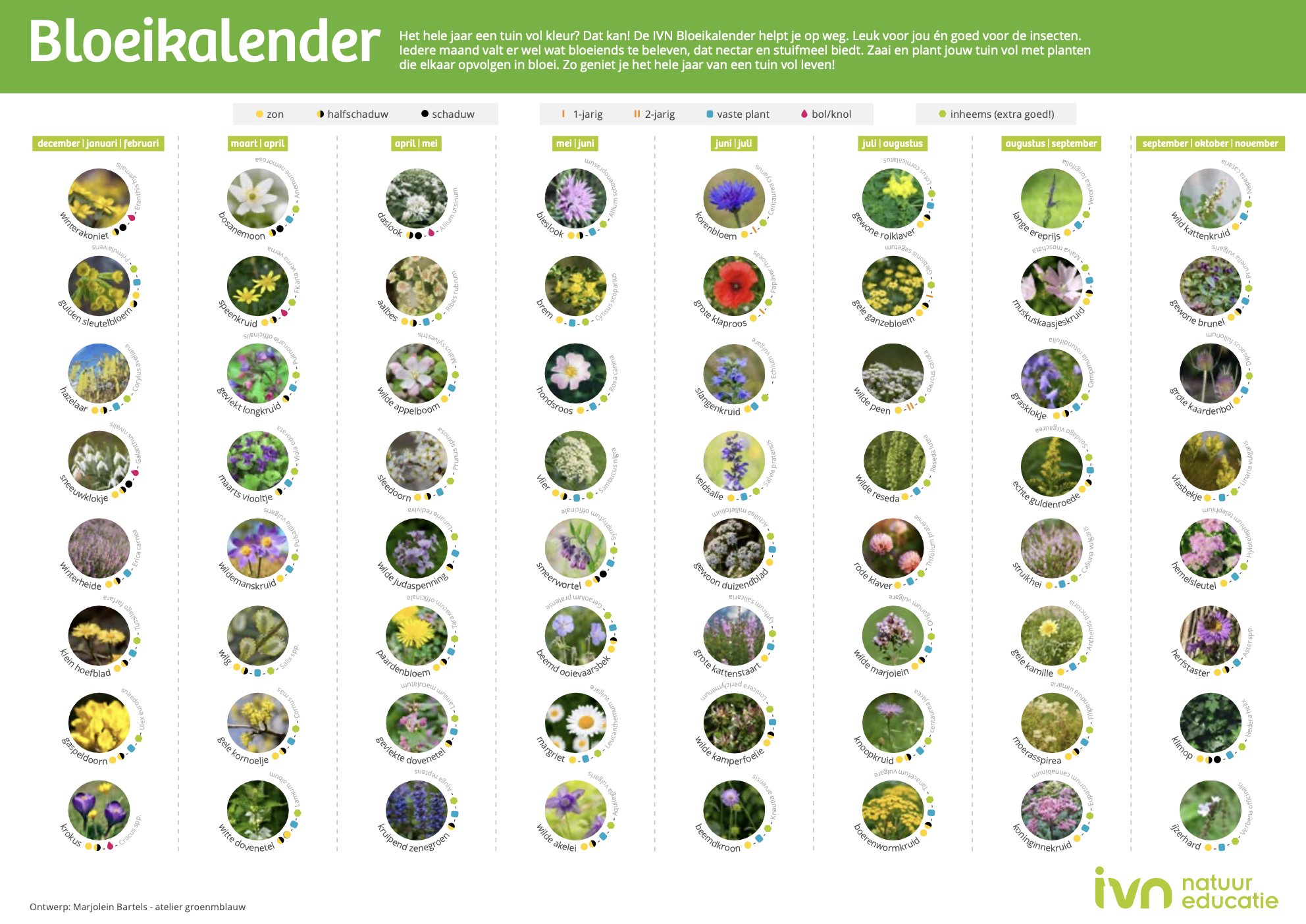
Plant as many perennials as possible. Perennials often have a longer blooming period, require less maintenance, and help maintain a better soil balance. For an eco-friendly garden, choose mainly native species that are beneficial to pollinating insects such as bees, hoverflies, and butterflies.
You can add variety to your planting by choosing a mix of low-growing plants, perennials, shrubs, bushes, and flower bulbs in the spring. You can also vary the height of the plants.
Download the IVN flowering calendar.
Tips!
You can propagate plants yourself by sowing seeds ortaking cuttings.
You can also, for example, divideperennials and split them intoseveral pieces.
Visit “De Groene Stad” at the Heimanshof botanical garden. It’s an eco-friendly model garden.
You can visitMeerBomen.Nuto get free trees and shrubs.
In Haarlemmermeer, there are regular seed and cutting exchanges. Follow us onsocial mediato stay up to date.
Post a request on the“Groen Haarlemmermeer”Facebook page. Who knows—maybe you can trade seeds or cuttings with someone in the community!
Take a look at our flower guides for different types of gardens, shown here:
Water Collectors
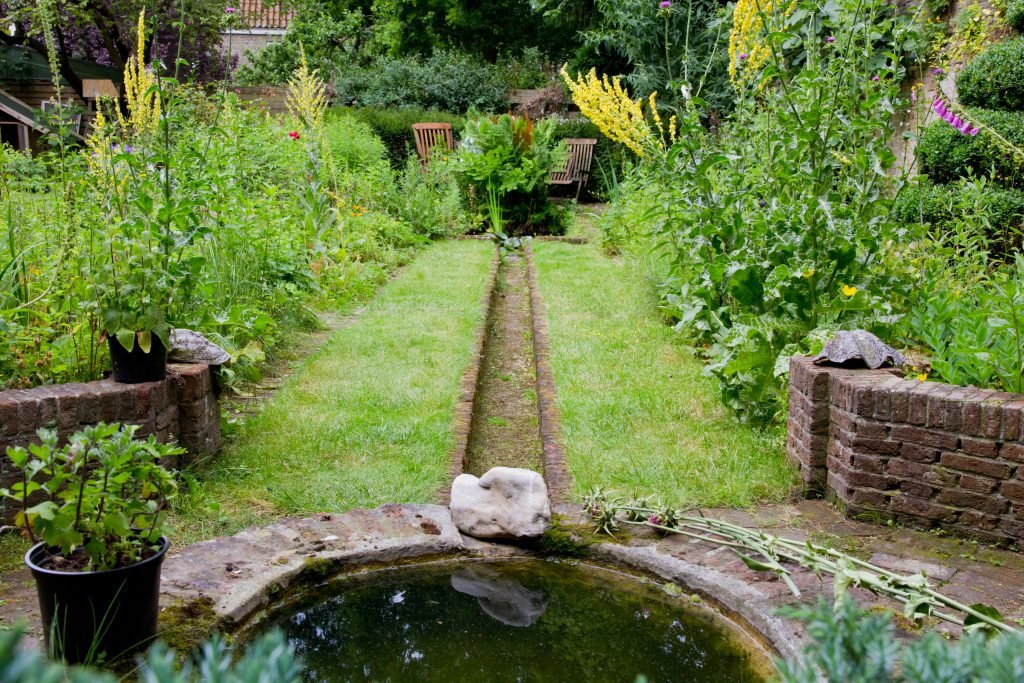
Rainwater collection systems are important for life in your garden. Rainwater is softer and purer than tap water and contains no chlorine or fluoride. And it’s free. By installing a rain barrel, you can collect rainwater right in your garden. That way, you’ll always have a supply of water when it isn’t raining. Plus, the clean rainwater doesn’t end up in the sewer system, so it doesn’t need to be treated unnecessarily.
You can also install arainwater basin or pond. This provides a habitat for frogs, dragonflies, aquatic insects, and other small animals. Plus, birds and insects can come here to drink or take a quick dip on hot days.
For more tips on water collection systems, such as a wadi or an infiltration box, check outWaterschappen!
Living Garden and Animal Lovers
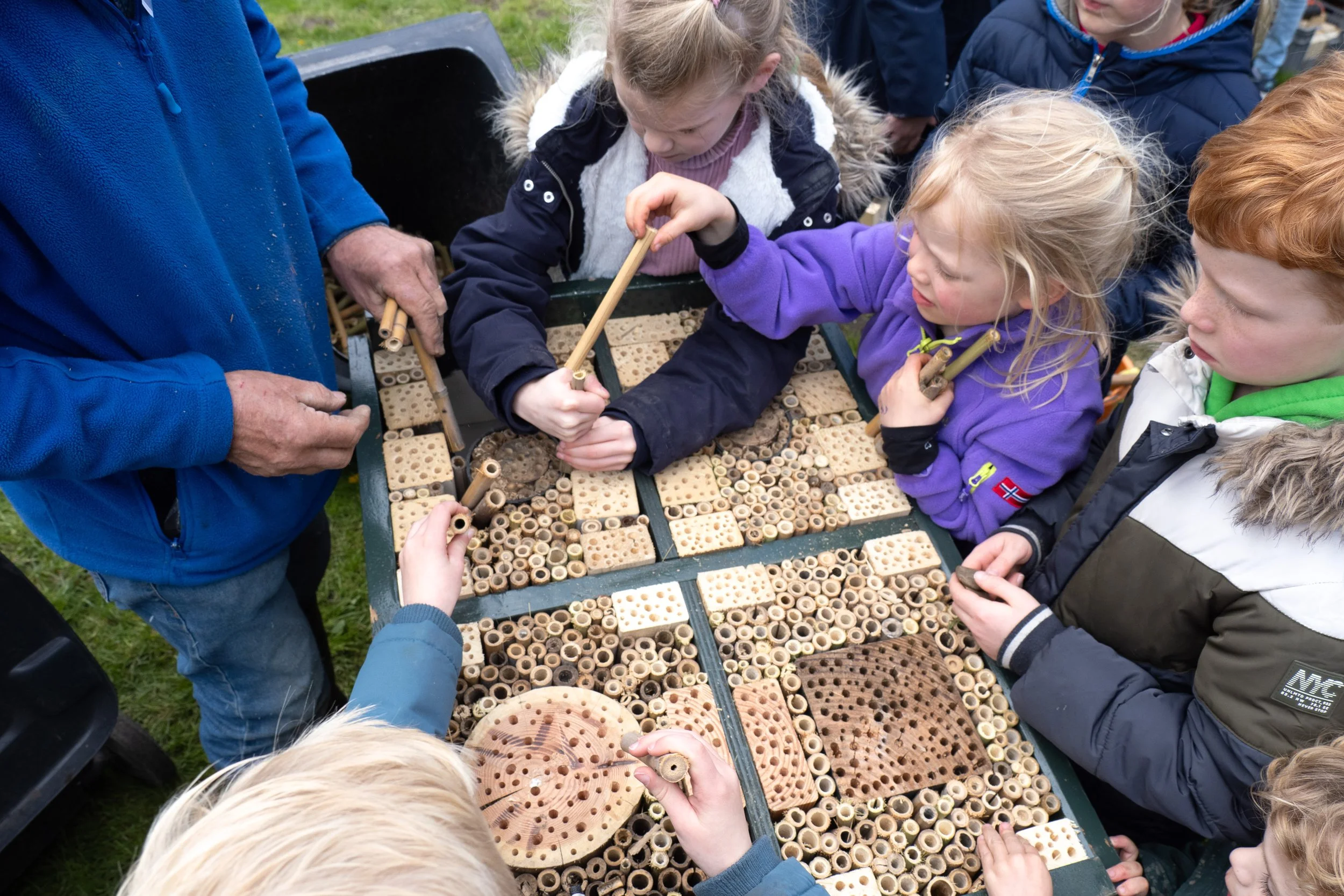
You can attract more animals anywhere! For example, set up birdhouses (if you don’t have a cat), bat or butterfly boxes, or bee and insect hotels. In the fall and winter, it’s a good idea to leave fallen leaves and dead plant matter where they are. Animals will find food there all winter long or use it as a place to hibernate.
Hedgehogs
Take the hedgehog, for example! This endangered species is a very welcome guest in your nature-friendly garden. Hedgehogs are natural predators of snails, caterpillars, and grubs. Want to make your garden even more attractive to hedgehogs? Then build a hedgehog gate and a hedgehog house! You can find more information about this on theHedgehog Conservationwebsite.
Birds
Birds are the superheroes of your biodiverse garden. They control insects and caterpillars that can damage your plants and prevent pests such as aphids. They also spread seeds through their droppings, ensuring the garden’s natural regeneration. Birds are an important indicator of a healthy garden, and their cheerful chirping creates the perfect nature experience.
If you’ve chosen plants for your garden that attract a lot of insects, you’re indirectly providing the birds with plenty of food. To complement your native plants, you could choose exotic additions to your garden that are known as good bird plants or trees. It’s especially important that they bloom at a different time of year or can tolerate different growing conditions than native plants. Think, for example, of the snowberry or the rowan. That way, the birds will have something to eat even in winter.
Finally, it's important to give them a little help during certain seasons. In the summer, set up a birdbath where the birds can drink and splash around.
Help them find food in the winter. Spread some 100% peanut butter on the branches or set out a small bowl of birdseed. Unfortunately, many bird foods contain chemicals and pesticides that make the birds sick. So always make sure to use organic birdseed, or make your own simple seed mix or suet ball! It’s a fun activity, too. Tip: Turn it into an activity with your kids, or make a big badge and give them as gifts to all your friends!You’ll find inspiration here.
Heat and Cooling
The most important thing is to replace as much gray as possible with green. A tile turns into a baking sheet in the heat, whereas greenery actually lowers the temperature.
Landscaping for Cooling
Perhaps when you were designing your garden, you already considered which plants can tolerate heat well and which are better suited for the shade. Did you know that a tree can lower the temperature by as much as 5 degrees? The perceived temperature is even lower.
Ideally, as little soil as possible should be visible so that it doesn't dry out.Groundcover plants not only help keep the soil cool and manage water, but also keep weeds at bay. It's a win-win!
Watering Plants
When it’s hot, it’s important to keep a close eye on whether your plants are getting enough (rain)water. On hot days, water them early in the morning and/or late in the evening, and pour the water directly onto the roots. Spraying isn’t a good idea, because it will cause the leaves to scorch in the sun.
Plants need less water than you might think. You can even “train” them by gradually reducing the amount of water you give them. Be especially careful with potted plants: they dry out much faster. You can place the pots on a saucer; that way, they can make the collected rainwater last a little longer.

Manage and Let Nature Take Its Course
Hooray! Your nature-friendly garden is ready. Now it’s time to really enjoy it. But how do you maintain your garden? The answer is: as little as possible. Nature has arranged things so that many elements play an important role during the growth and flowering process. For example, spent flowers and withered leaves are all packed with nutrients for your plants.
Water and Drought
It’s especially important to check carefully whether your plants and flowers have enough (rain)water. Use your senses: Is your plant looking a little limp? Stick your finger in the soil. Is it dry near the roots? If so, give it some extra (rain)water. Do you see spent flowers? Pick them off! This will encourage the plants to produce more flowers.
Weeds
It's also important to remove weeds. This is especially important if you've just planted your garden. The better you keep up with this during the first year, the less work you'll have to do in the years that follow.
Pruning
In the summer, you can go out into the garden with a pair of scissors about once a week to trim off small, spent flowers. This gives the plant more energy to direct to the rest of the plant.
Soil
Work the soil as little as possible. This helps preserve soil life and ensures the soil retains moisture well. You can, however, provide the soil with extra nutrients, for example,by making your own compost.
Mulching
You can leave leaves and pruning clippings in your flower beds and planting areas. This creates alayer of mulchbetween the plants, which slows weed growth and reduces moisture evaporation. This means you’ll also have to weed and water less often. TIP: If there aren’t many leaves in your yard, you can fill a few bags by collecting them from a roadside or park nearby!
Many people enjoy trimming dead twigs from plants or raking up fallen leaves, but in nature, everything serves a purpose. They also provide important hiding places for insects and hedgehogs.
Spring Maintenance
In the spring, you can lightly hoe the soil and prune back plants that have finished blooming. You can do this between the last night of frost and the longest day of the year: June 21.
So, the bottom line for an eco-friendly garden is this: try to appreciate its beauty and, above all, let your garden run wild!
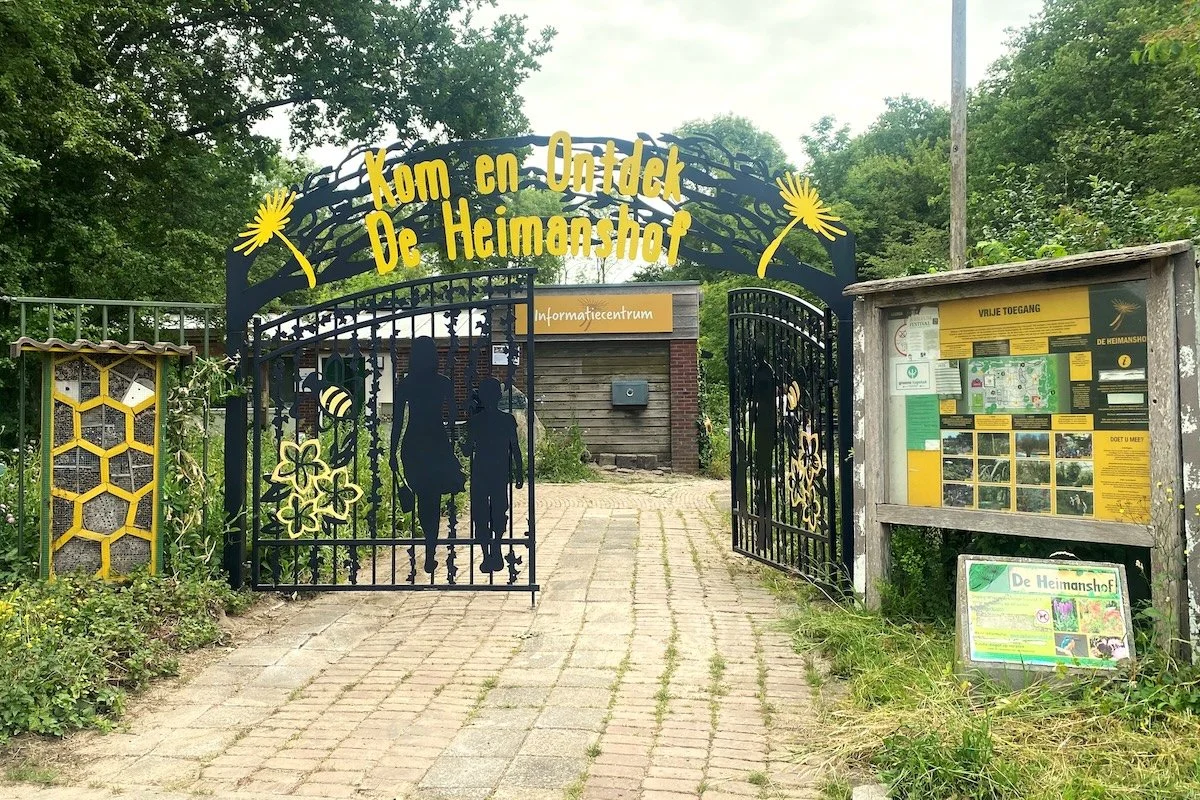
Looking for inspiration? Visit the Heimanshof
The Heimanshof is a botanical garden in Hoofddorp where nature education and experiencing nature take center stage. There, you’ll find the various landscapes of the western Netherlands, along with their corresponding flora and fauna (700 species). But there’s also a nature-friendly model garden called “De Groene Stad” (The Green City). It offers inspiration and examples for rainwater collection systems, native plants, semi-paved paths, and ways to attract animals such as hedgehogs—and much more.
In addition, the Heimanshof features an orchard, a herb garden, an apiary, a nature playground, and greenhouses representing various climates around the world. As part of our educational program, “De Groene Kapstok,” we also offer many lessons and workshops, and there are school gardens on the grounds.