Here's How to Become Your Street's Gardener
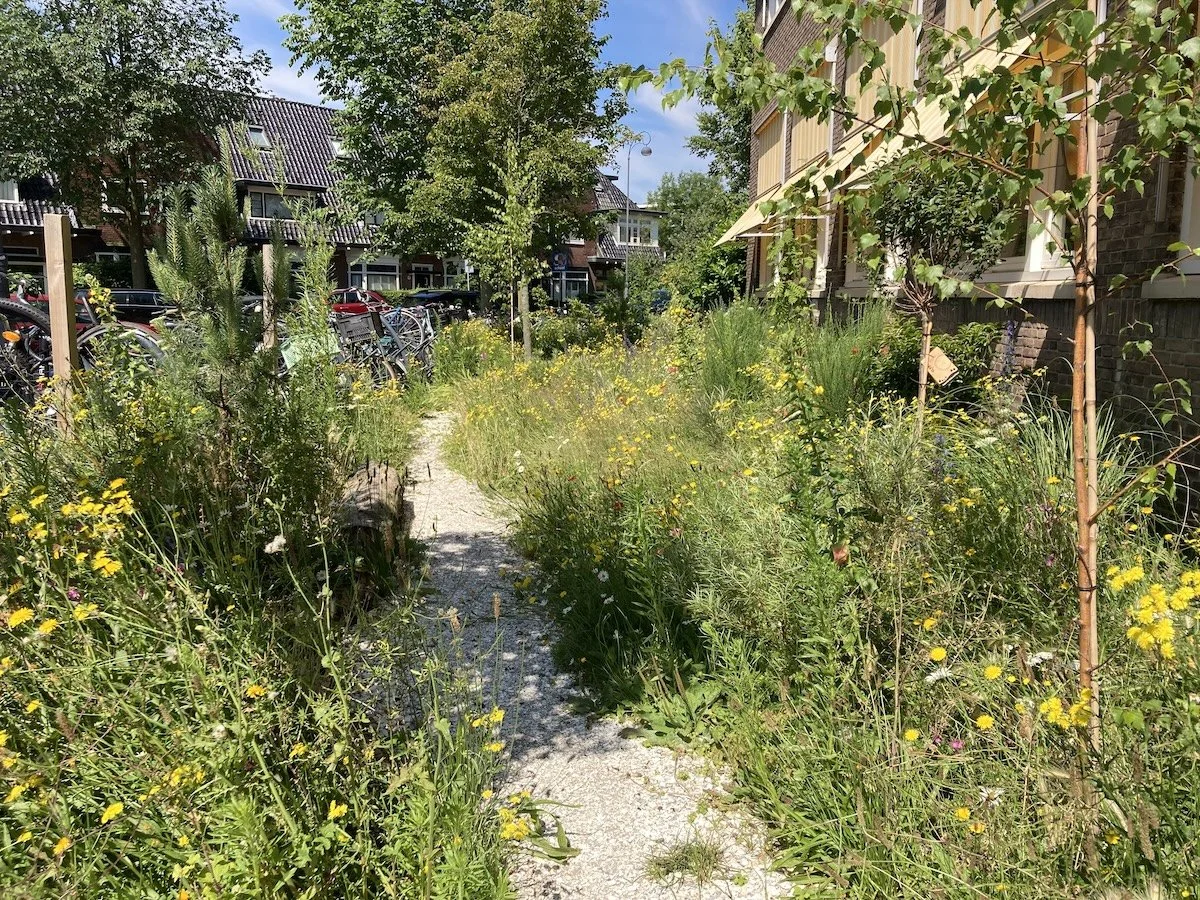
If you’d like, you can also “adopt” a small public green space. This means you’ll plant and maintain it yourself (so the city won’t do it anymore). Most people choose to start with the green space right in front of their front door. And sometimes, together with a few neighbors, they make parts of a nearby park even greener.
In any case, it's a good idea to get your neighbors excited about joining in. Together, you can create a colorful and eco-friendly neighborhood. Plus, it's fun to work on this together.
Below, we list the standard options. If you have other ideas, feel free to share them with us for advice or assistance.
Vertical Garden
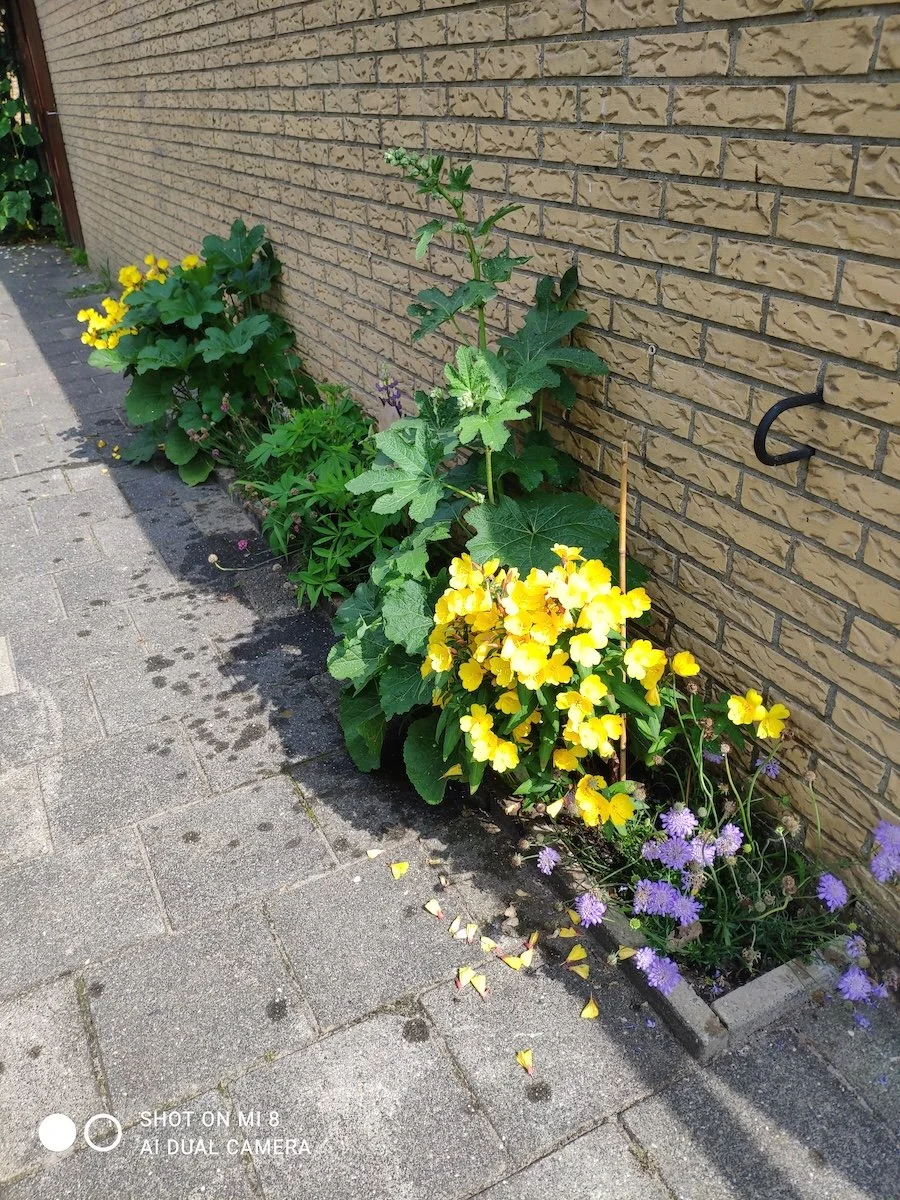
A facade garden is a narrow strip of greenery directly against a facade that borders the street or sidewalk. The facade garden may be 1 sidewalk tile wide (30 cm). However, at least 120 cm of sidewalk (4 sidewalk tiles) must remain.
You can fill the facade garden with both low-growing plants and shrubs, or you can choose “climbers” that grow up the facade.
Before you begin, it’s important to register your facade garden with the municipality. That way, they’ll know that you’re responsible for its maintenance.
Check out this handy step-by-step guide to creating a vertical garden.Step-by-Step Guide: Vertical Garden | Milieu Centraal
Tree base
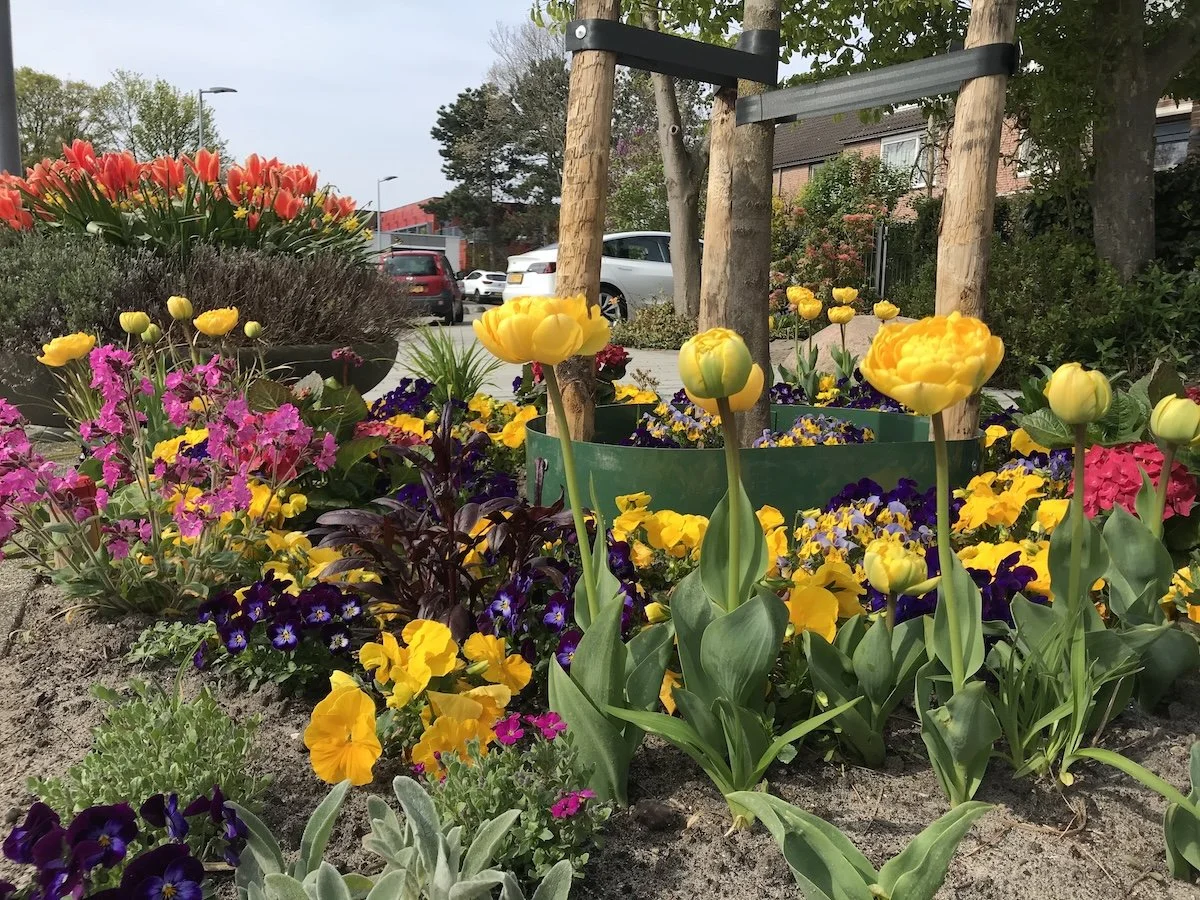
A tree pit is the area around a tree that isn't paved. You can turn it into a small garden. Sometimes it's also possible to make the tree pit a little larger. You'll need to discuss this with the municipality.
You should only plant shallow-rooted plants or bulbs in a tree pit. Here are some tips on what to plant:Tree Pit Besties - Guerrilla Gardeners
(Imagine if you and your neighbors turned all the tree pits on your street into little gardens. What would that be like?)
Here, too, you must register your tree pit with the municipality.
Community Garden
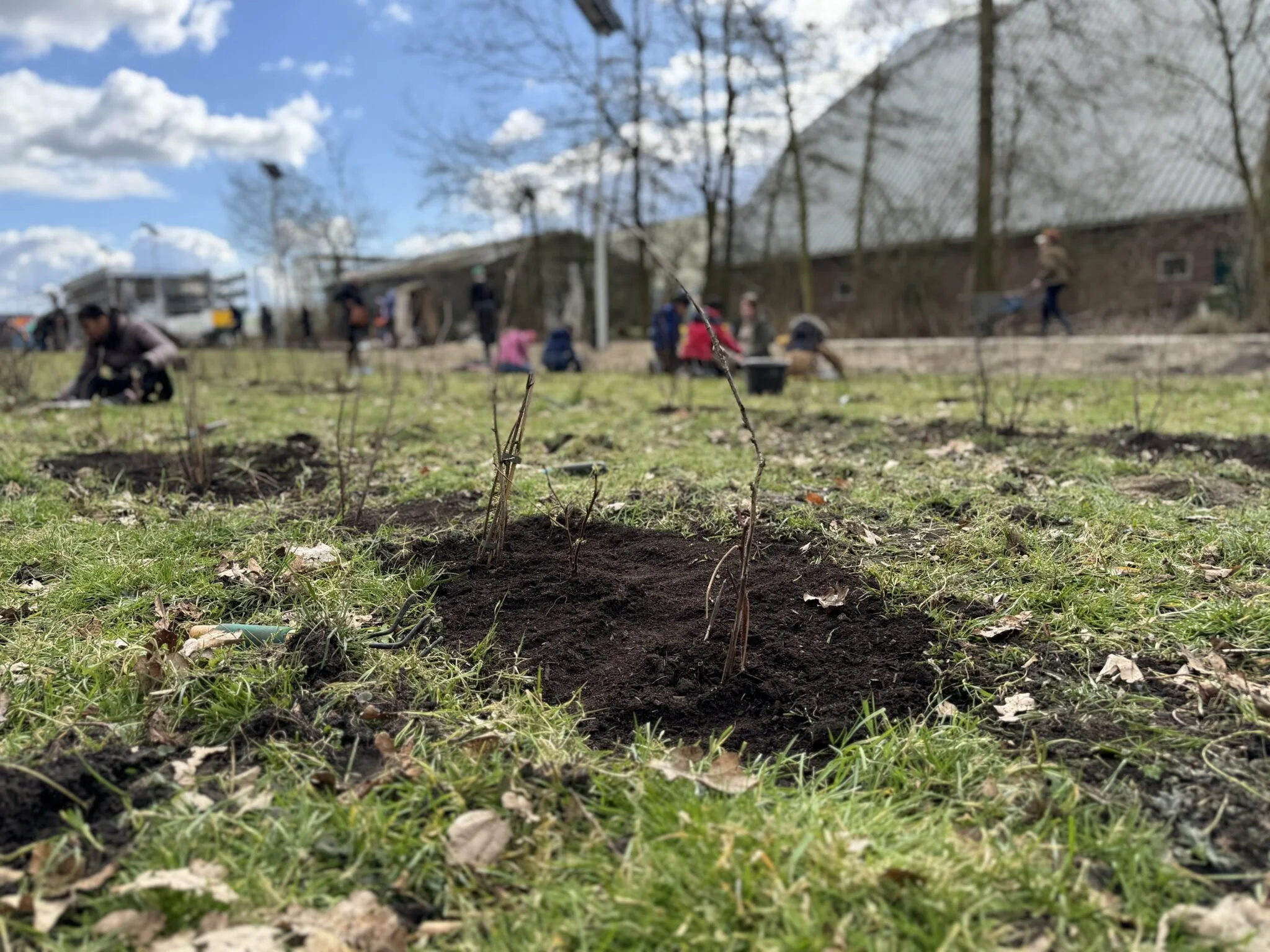
A community garden is a larger piece of public green space that is maintained jointly by several neighbors. Sometimes it’s a section of a park that you redesign yourselves. And sometimes it’s a so-called “planting bed” that is set up and maintained by local residents. In all cases, these are somewhat larger projects. That’s why it’s important to think carefully in advance about what you want to do (make a plan!) but also how you’ll maintain it together.
We've put together a brief step-by-step guide for creating a community garden.
Are you excited? Submit your plan to the municipality.
The Red Post
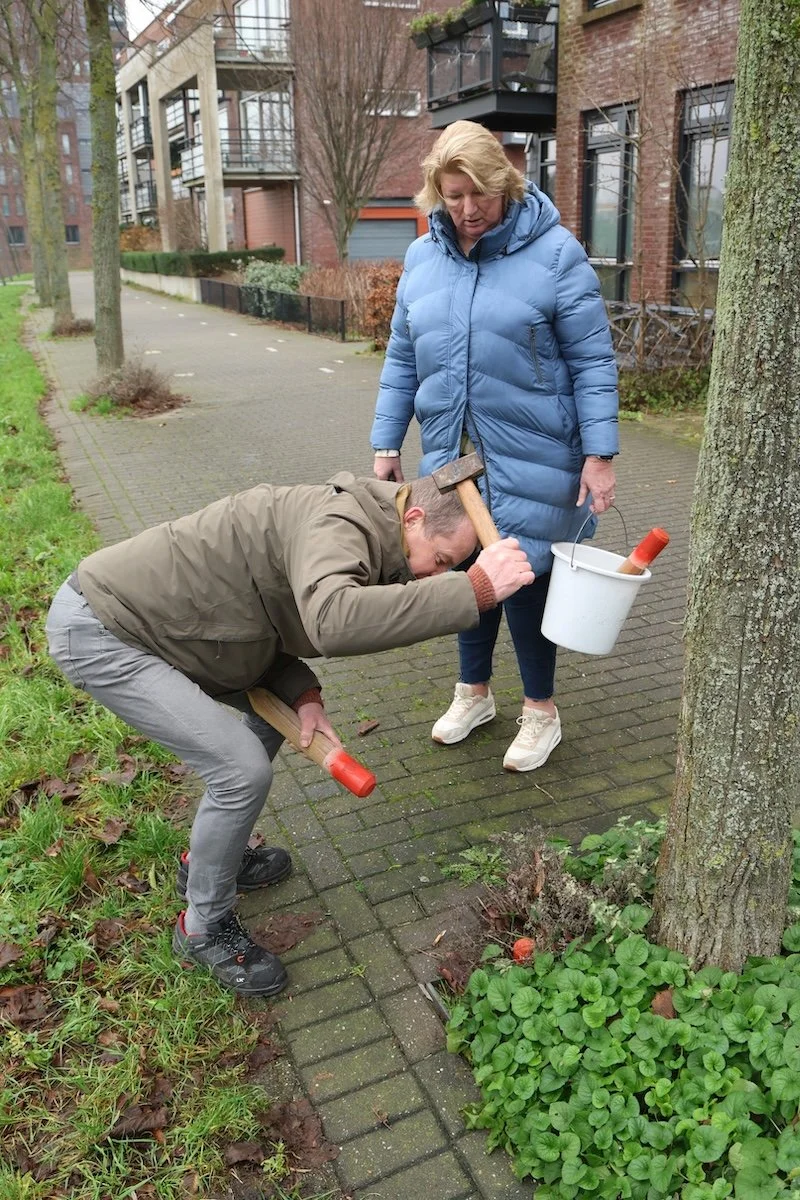
If you’re going to take care of a small public green space, you can mark it with a red stake (or a tree disc). That way, the municipality will know that you’re responsible for its upkeep and will leave it alone. And it shows other residents that they, too, can help make the area greener!
Tip: Find a jar!
Various organizations offer grants, funds, or sponsorship opportunities for greening initiatives. These typically involve larger projects with a well-defined plan, but smaller contributions are also possible. Here are a few options:
NLdoetby the Oranjefonds
Neighbors' Day, organized by the Oranjefonds
Trees for All's GroenDoen Fund
Meerwind's "Wind in de Rug" Sponsorship Fund
Green Allies. Applications are accepted until November 30, 2026, at the latest. The program will close earlier if the budget is exhausted.
It’s a good idea to take some time to explore the options and also to look into the application deadlines and processing times for these types of funds. You can then tailor the development of your plan accordingly.